Biotech Ecommerce SEO: 8.4x Organic Sales From Adjacent-Niche Content
A first-person case study of the topical authority play that broke a compact biotech niche open: 32× organic traffic, 8.4× sales growth, and a Forbes-featured incumbent finally under pressure.
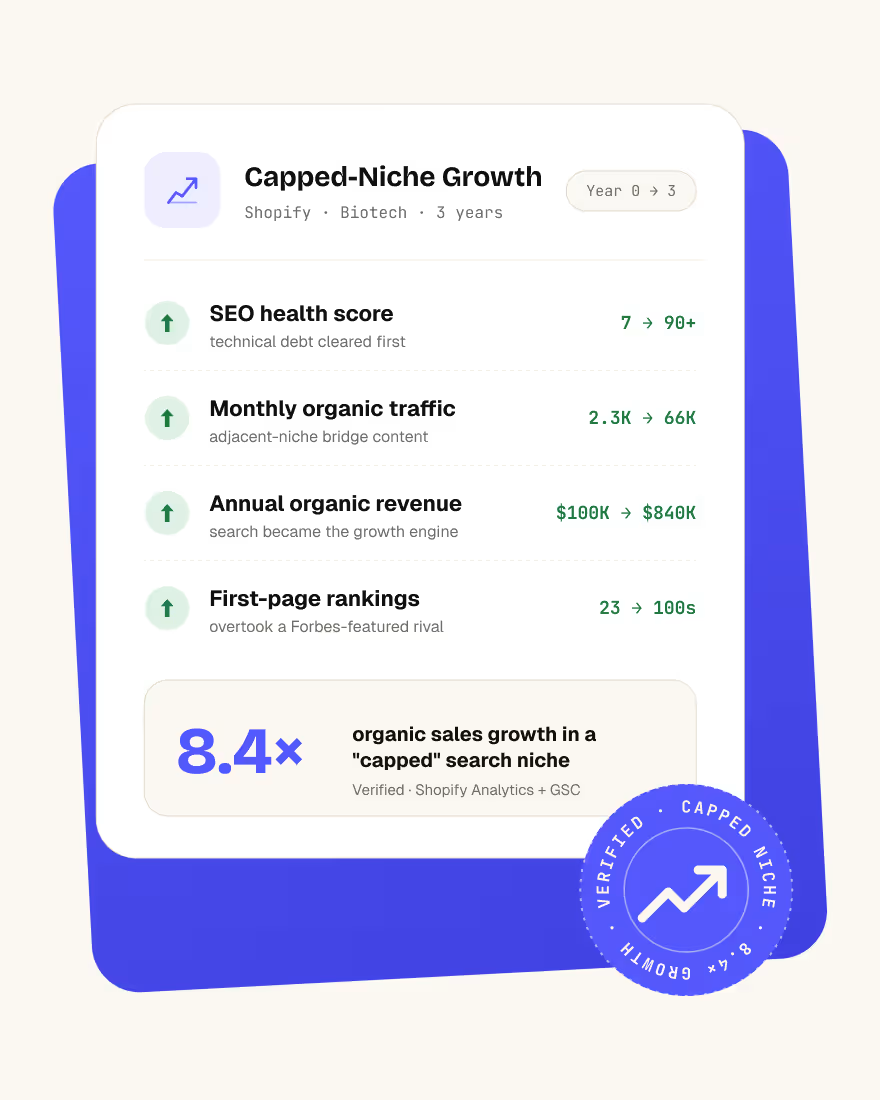
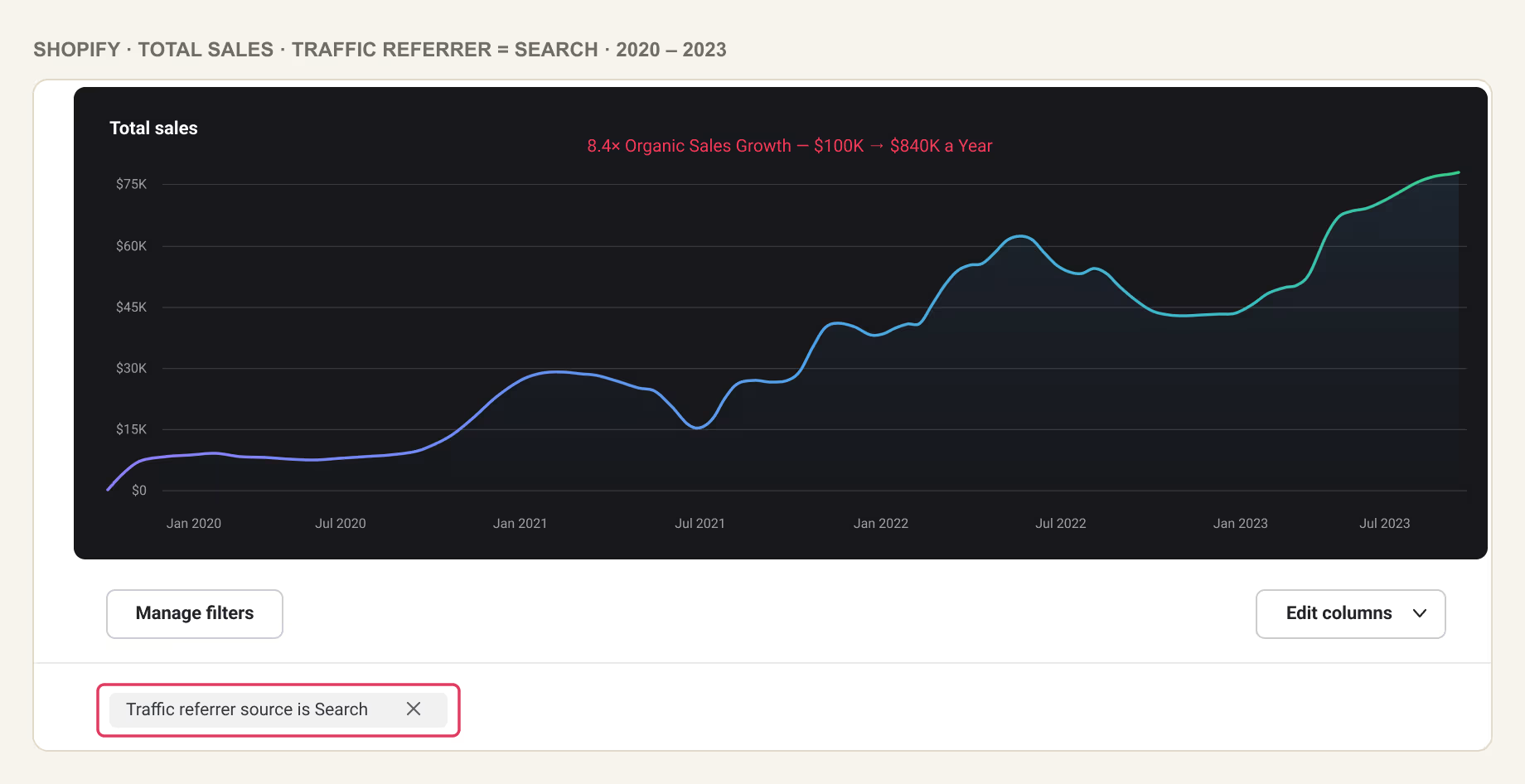
Organic traffic and revenue from Year 0 to Year 3, a 32× traffic lift and 8.4× sales growth.
A biotech Shopify store came to me stuck. Sales were around $100K a month, the SEO health score was in single digits, and a Forbes-featured competitor was quietly dominating every commercial search term the brand wanted. Three years later the same store was doing $840K a month in organic sales, but the interesting story isn’t the number. It’s how we got there when the niche itself was “too small” to grow inside.
This is the case study I get asked about most, because the tactic behind it works anywhere the search volume looks like a ceiling.
Starting position
When I inherited the site, some things looked healthier than they were. Search Console showed 54.1K clicks and 1.71M impressions, plenty of demand hitting the site. Under the hood, though, the pipes were leaking. Only 23 pages were showing up on page one for anything, the SEO health score was 7 out of 100, and the content library was a patchwork of thin listicles and generic product descriptions.
Monthly organic revenue: about $100K. Not bad, but nowhere near the ceiling of a category that big.
The brief
“I need you to beat the competitor that’s standing above my site, in growth and in revenue.”
Straightforward on the surface. Complicated once you actually looked at the competitor: a well-known brand with a decade of editorial mentions, unpaid links from Forbes and Men’s Health, and topical authority in a niche most brands take years to earn. Beating them wasn’t going to be a matter of doing more of what everyone else was already doing.
The Ceiling
Before I could plan the growth work, I had to name the actual problem, which turned out to be different from what everyone assumed.
What the audit surfaced
I ran the store through Ahrefs, SEMrush, and Screaming Frog in parallel. Some of what came back was expected. Some of it wasn’t.
- Technical debt at scale: crawl errors, slow LCP on mobile, missing meta tags across half the catalog.
- Thin content everywhere: no editorial standard, no topical structure, and no clear buyer journey through the site.
- A near-empty backlink profile: a handful of low-authority mentions, no editorial links, nothing that would convince Google to raise the store’s ceiling.
- UX gaps on Shopify: missing trust elements and buying signals that would matter later, once traffic showed up.
Why “just do more SEO” wouldn’t work
Here’s where the story gets interesting. Even if I fixed everything above perfectly, the actual biotech search volume was small. The audience was specific and technical, the head terms were dominated by the incumbent, and the long tail wasn’t deep enough to make up the gap.
Adding more content in-niche would move the numbers a little, then plateau. Chasing the incumbent’s exact keywords would take years of link building I didn’t have the budget to buy. The whole shape of the problem said the same thing:
“The niche is too small to win from the inside. Growth has to come from outside it.”
The Bridge
The bet was simple, once I stopped trying to be clever. Buyers of biotech products don’t only search for biotech things. They search for the health, fitness, and food topics around the reason they’d buy, the informational queries a serious buyer types before they’re ready for a product page. Those queries had massive volume, wide-open SERPs, and almost no competition from the incumbent, whose content strategy was still stuck inside its own niche.
So I built a bridge.
Adjacent-niche content brought in high-volume, high-intent readers. Deep internal linking, tuned to the buyer’s journey, routed them toward the money pages. The niche itself hadn’t gotten any bigger. The store’s catchment area had.
Mapping the adjacent niches
The map wasn’t a guess. I built a topical framework from actual buyer research, the questions I saw the audience asking on forums, subreddits, and long-tail search, then clustered them into three adjacent verticals that shared a demographic with biotech buyers but had wildly more search demand: health, fitness, and food.
Every adjacent-niche cluster had one job: bring in readers who were plausibly one buyer education step away from a purchase. If a topic couldn’t be honestly connected to a biotech product page with a natural internal link, it didn’t make the map.
The SME + optimiser split
The client had a genuine advantage I wanted to weaponize: in-house domain experts who could write about biotech in a way I never could. So I split the content production down the middle.
- Core & pillar content: written by the client’s in-house SMEs. These were the pieces that had to sound like they came from someone who actually knew the subject. My team optimized them for search after the fact.
- Adjacent-niche traffic content: written by my team. Health/fitness/food pieces didn’t need biotech expertise. They needed clean structure, sharp internal linking, and a clear route into the money pages.
That split solved the client’s biggest operational problem, a slow internal approval chain, without sacrificing depth on the pages that needed it most.
The Build
Strategy was one thing; execution was three years of steady work. Three parallel tracks did the heavy lifting.
1Technical foundation
The SEO health score wasn’t 7 because of one big issue, it was 7 because of a hundred small ones. I worked through crawl errors, page-speed problems, missing meta tags, broken internal links, and Shopify-specific UX gaps in prioritized sprints. Within the first few months the score cleared 90.
None of this was glamorous. All of it was the price of admission for everything that came next.
2Content system
Content shipped on a predictable publishing schedule, SME-written pillar pieces in the core niche, my team’s optimized traffic pieces in the adjacent niches, and a consistent internal-linking pattern connecting the two.
The publishing rhythm mattered as much as the volume. Google trusts sites that show up. Sporadic publishing signals a stalled brand; steady publishing across the topical map signals authority under construction.
3Authority building
Link building ran alongside the content system rather than as a separate campaign. I identified authority sites in each adjacent vertical, tracked opportunities manually, and pitched proposals that offered something the target actually wanted, data, quotes, or genuinely useful content. Response rates went up when the pitch stopped looking like everyone else’s.
The backlink profile grew slowly and cleanly. That’s the version that survives algorithm updates.
The Compounding Curve
The Outcome
Three years, three numbers I still care about.
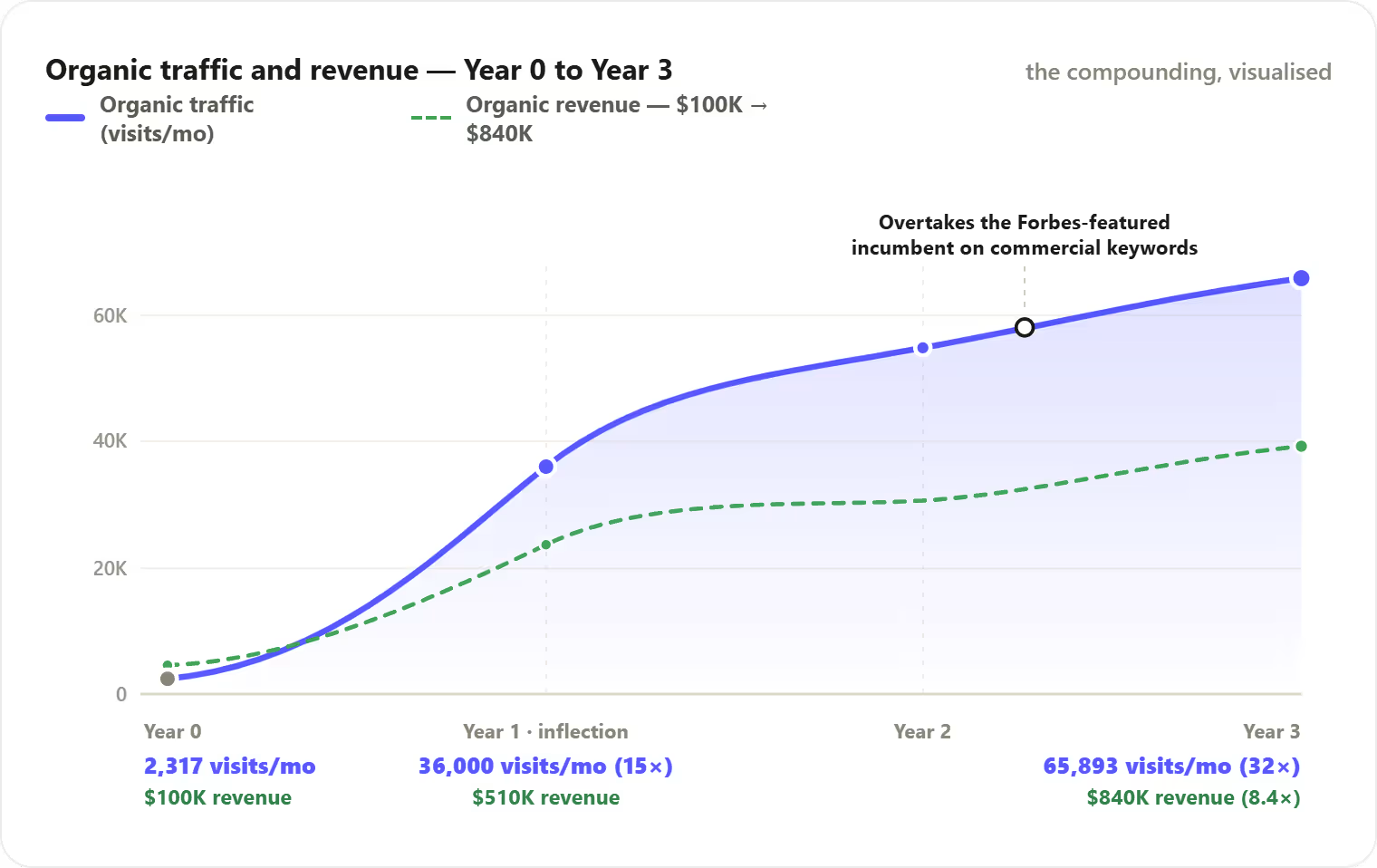
The Forbes-featured incumbent stopped being untouchable. The client’s business stopped being niche-capped. And the adjacent-niche playbook I built here has been the model for every “our category is too small to grow in” conversation I’ve had since.
What I Took Away
- 1 “The niche is too small” is almost always a framing problem. Your audience searches for more than your product. Map the queries around the buying decision, not just the queries that name the product.
- 2 Adjacent-niche traffic converts, if the internal linking is honest. If you can’t naturally route a reader from an adjacent-niche article to a money page, that article isn’t earning its place on the map.
- 3 Use your client’s experts where they’re expensive to replicate. SMEs write pillar content nobody else can. Optimisers scale traffic content SMEs shouldn’t waste time on. Split the work accordingly.
- 4 Technical debt sets your compounding rate. A health score of 7 doesn’t just hurt today, it caps how fast every future content and link investment can return.
- 5 You can’t outspend a decade of editorial links. You can outflank them. Route your growth through categories the incumbent isn’t defending.
- 6 Long engagements compound in ways short ones can’t. Year 3 revenue was almost entirely built on content and links shipped in Years 1 and 2. That’s the shape of real SEO.
Related: Shopify SEO consulting. Guide: Ecommerce Keyword Research: How to Find Keywords That Sell.