Technical SEO Case Study: Fixing a Shopify Store Before Google Crawled It
A new Shopify alt wine store was about to launch with broken canonical logic, a misconfigured GSC property, unverified 301 redirects, and zero schema. I found and fixed every issue before a single page was submitted for indexing.
How I identified the gap and built the keyword architecture.
A new Shopify store in the alt wine niche was preparing to launch with a comprehensive SEO strategy already planned. Before any on-page optimization could be effective, a full technical audit was needed to ensure Google could correctly crawl, interpret, and index every page from day one.
Technical issues on a new site are especially costly. Unlike an established site with existing traffic and authority to absorb problems, a new domain depends entirely on Google correctly reading every signal from first crawl. A canonical error on a new site doesn’t just affect one page, it can split authority across multiple URLs before the site has any authority to split.
The Challenge: A Clean Site With Hidden Technical Issues
The store looked clean on the surface. Well-designed theme, properly structured URLs, all pages built and ready. But a surface-level review misses what matters: what Google actually reads when it crawls your site for the first time.
Canonical logic issues hiding in plain sight
Shopify’s default canonical behavior is mostly correct but has edge cases that catch new stores. Products appearing in multiple collections can generate competing canonical signals. Paginated collection URLs need explicit canonical handling. Without these in place, the first index can be the wrong one, and fixing it requires a second crawl cycle, costing weeks of ranking time.
“On a new site, the sequence matters more than on an established site. If canonical tags are wrong when pages first get indexed, Google indexes the wrong URL. Fixing them later doesn’t immediately update, it requires recrawl and re-indexing time.”
The GSC misconfiguration most new sites get wrong
The store’s Google Search Console had been set up with a URL-prefix property (https://www.domain.com) rather than a Domain Property. This meant coverage data was split, with only one URL variant being tracked, creating a misleadingly incomplete picture of indexing status. This is the default mistake most new site owners make, and it costs real visibility into what Google is actually doing with the site.
The Audit: Six Areas, Fix Before You Optimize
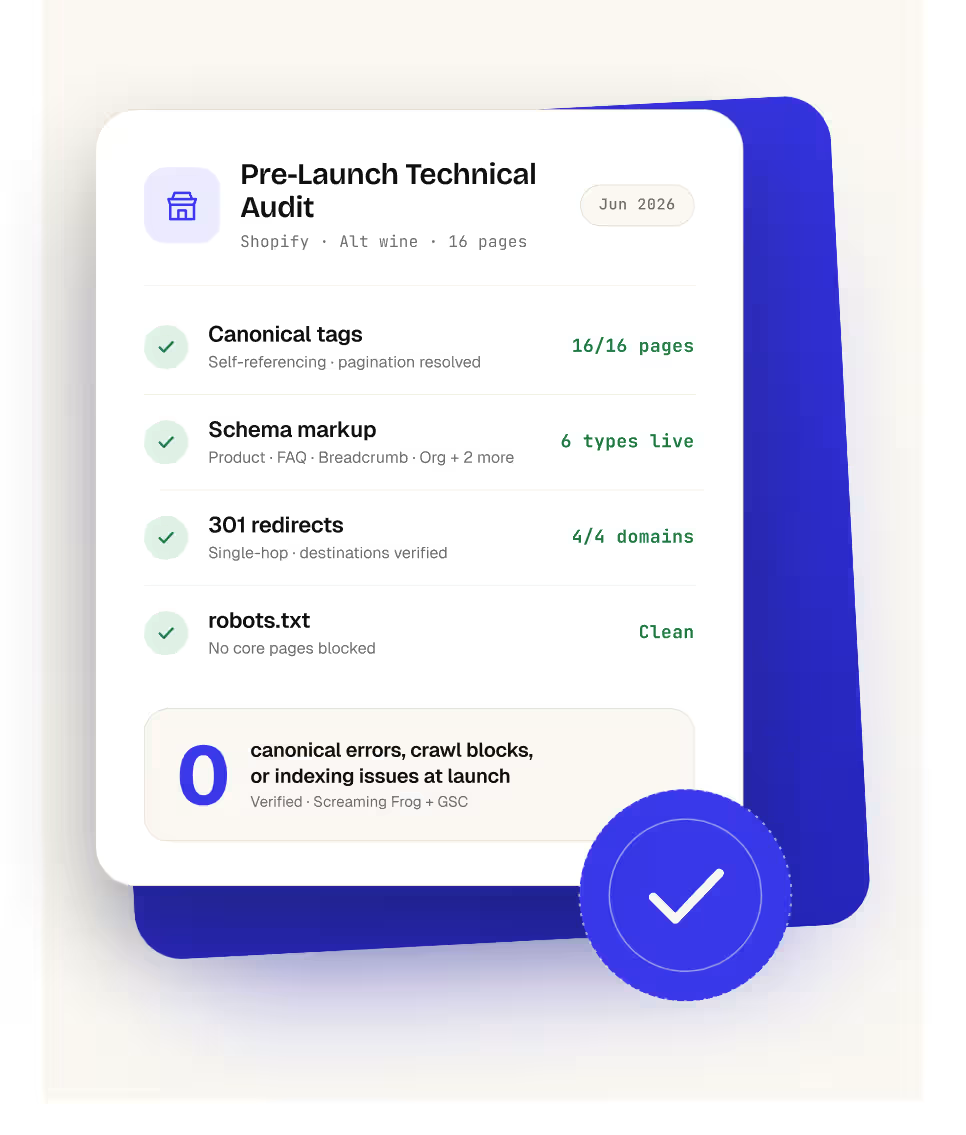
The guiding principle was simple: on-page optimization applied to a technically broken page is wasted effort. Fix crawlability, canonicals, and indexing first. The audit covered six areas in priority order: canonical configuration, robots.txt review, redirect chain verification, schema markup, GSC setup, and XML sitemap validation.
Six schema types deployed via theme injection
The audit found zero schema markup sitewide. Six JSON-LD types were implemented through Shopify’s theme.liquid: Organization (homepage), WebSite (homepage), CollectionPage (six collection pages), Product with Offer (four product pages), FAQPage (collection and hub pages), and BreadcrumbList (sitewide). Schema was validated against Google’s Rich Results Test before submission.
Implementing schema before the site has traffic is actually the optimal timing: new pages processed by Google with complete schema get evaluated for rich results eligibility from their first crawl. Retroactive schema implementation requires a second crawl cycle. First-crawl schema eligibility is a real advantage on new sites.
Four vanity domains, verified individually, not assumed
The brand operated four redirect domains (product-specific vanity URLs) intended to 301 redirect to the main store. HTTP header checks confirmed the redirect status codes, destination URLs, and whether redirect chains existed. A 301 status code doesn’t tell you where the redirect goes, the destination URL must be verified explicitly. All four domains were confirmed delivering clean single-hop 301 redirects to the correct destination collection pages, not just the homepage.
The Execution: Audit, Fix, Verify
Results: Clean Technical Foundation From Day One
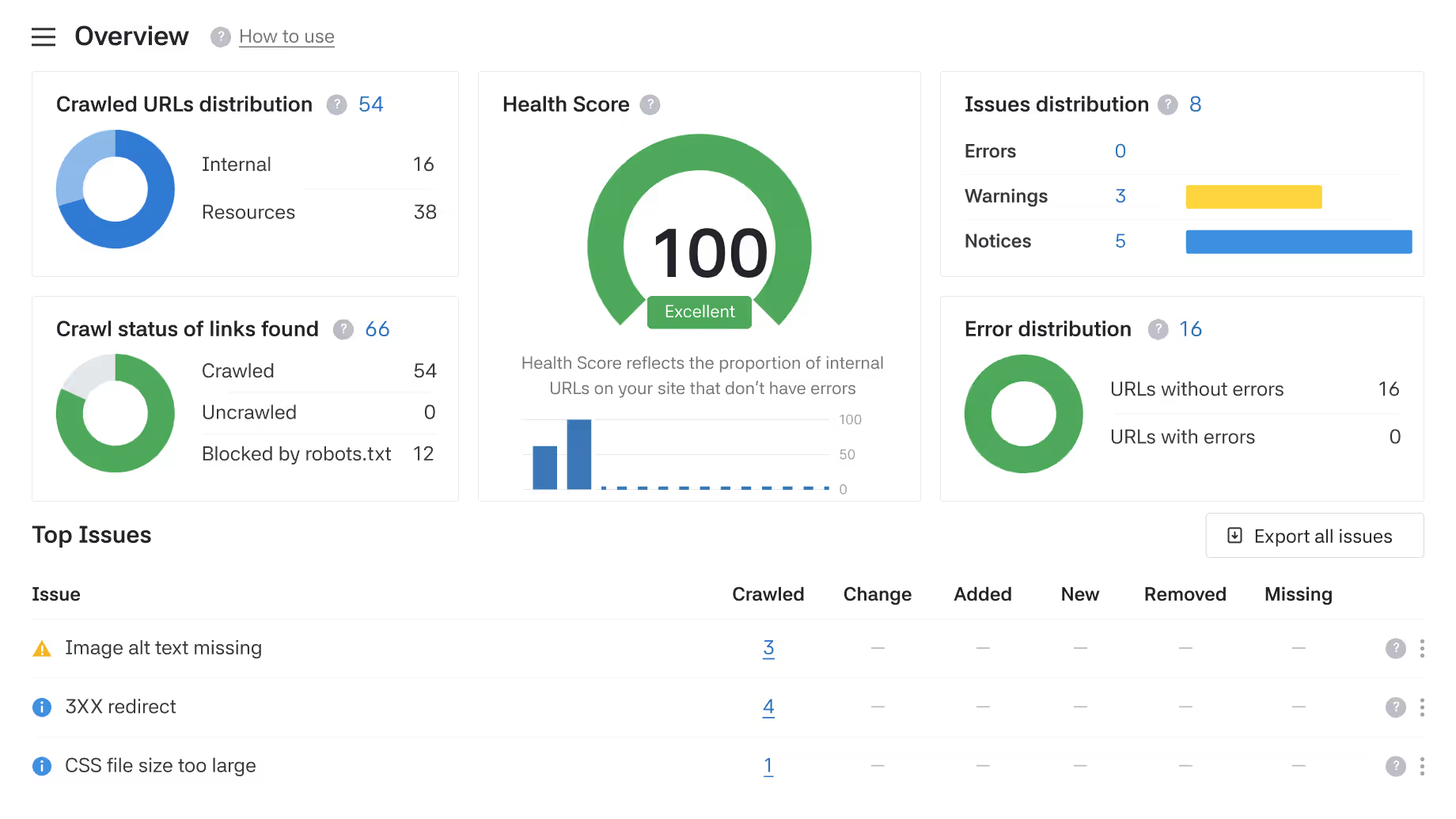
All technical issues identified in the audit were resolved before on-page optimization began. The site went into its optimization phase with correct canonical configuration, verified redirects, complete schema coverage, and a properly configured GSC Domain Property.
Key Takeaways
- 1 Do the technical audit before on-page optimization, never after. On-page work on a technically broken page is wasted effort. Fix crawlability, canonicals, and indexing first. Then optimize.
- 2 Set up a Domain Property in GSC, not a URL-prefix property. The Domain Property covers all URL variants and gives a complete, accurate view of indexing status. Most new sites are set up incorrectly with URL-prefix properties and are working with incomplete data.
- 3 Verify redirect destinations, not just status codes. A 301 status code doesn’t tell you where the redirect goes. Verify the destination URL explicitly, especially for vanity domains where the intended destination is a specific collection page, not the homepage.
- 4 Implement schema before the site has traffic. New pages processed by Google with complete schema get evaluated for rich results eligibility from their first crawl. Retroactive schema requires a second crawl cycle. First-crawl eligibility is a real and undervalued advantage on new sites.