Jewelry SEO: How I Grew a Luxury Shopify Store to $175K/Month in Organic Revenue
A 16-month, first-person walkthrough of how I rebuilt a lab-grown jewelry Shopify store from an invisible catalog into a self-sustaining organic channel: the collection architecture, the CRO calls, and the compounding curve that pulled organic past paid.
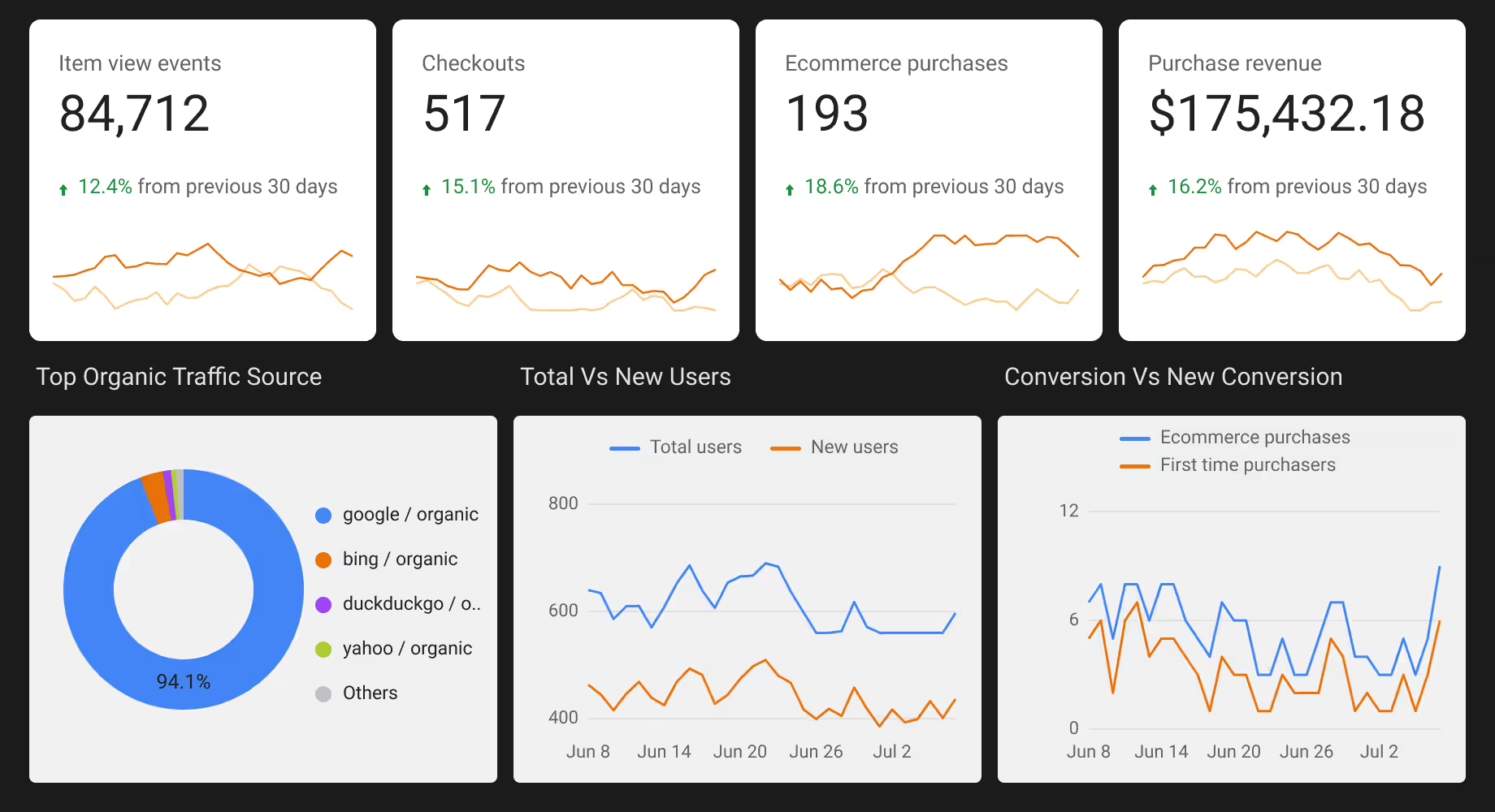
The 16-month compounding curve, from zero organic clicks to $175K a month.
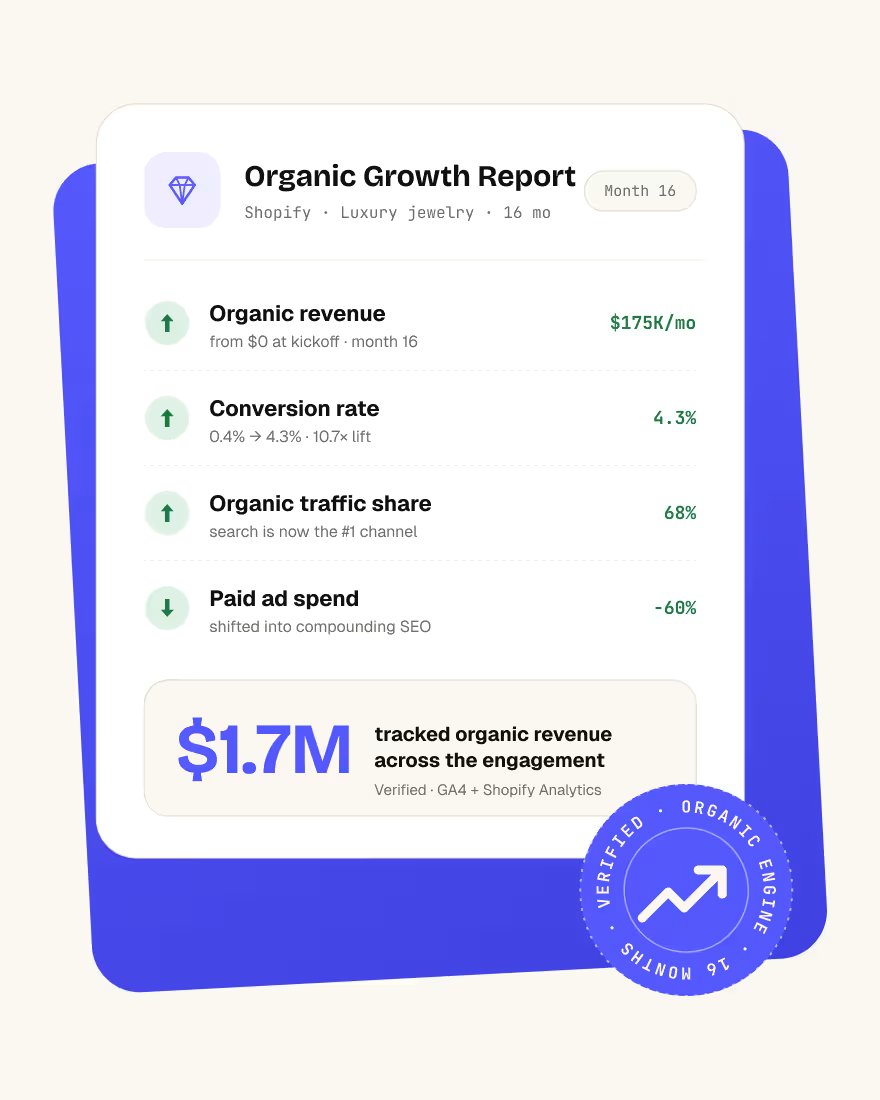
A luxury Shopify jewelry brand landed on my desk with a beautiful catalog, ambitious paid-ad budgets, and almost no organic footprint. Sixteen months later the same store was pulling $175K a month from search, enough to cut its ad spend by 60% and still grow.
This case study is the honest version of that arc. Not a growth-hack story, not a “we tried one weird thing” post, just the sequence of Shopify SEO decisions that turned an invisible store into a compounding revenue channel, told in the order I actually made them.
Where the store stood at day one
The engagement kicked off with a Shopify store that had every advantage on paper except discoverability. Traffic depended almost entirely on paid search and paid social. Organic clicks were rounding-error small, and the product catalog, despite carrying some genuinely striking pieces, was invisible to anyone typing a category term into Google.
“Roughly zero organic clicks per day, a conversion rate hovering around 0.4%, paid ads carrying almost all revenue with rising costs, and no content, no meaningful backlink profile, and a thin technical foundation.”
The gap was obvious. The interesting question was where to start.
About the brand
The client sells direct-to-consumer lab-grown gemstone jewelry, the kind of category where trust, craftsmanship, and ethical sourcing matter as much as the price tag. Their pieces sit in the $500 to $5,000 range, which is a fascinating price band for SEO: high enough that buyers do serious research before purchase, low enough that impulse still plays a role once trust is established.
That combination shaped everything I built. Every SEO decision had to earn trust and shorten the research loop.
The Wall
Before I could plan a Shopify SEO rebuild, I had to name what was actually in the way. Five things kept showing up in the audit.
The Playbook
The rebuild came down to five workstreams, running in overlapping waves. I sequenced them so each one made the next one work harder.
Shopify foundation, fixed first
Before any content or link work, the store had to be technically sound. On Shopify that meant fixing mobile speed, tightening crawl and index rules, and cleaning up the URL structure so future work compounded instead of fought itself.
I also killed off duplicate collection URLs generated by Shopify’s default routing, a small change that quietly eliminated a whole category of cannibalization problems downstream.
Collection pages as the store’s revenue engine
This was the biggest lever. On a jewelry Shopify store, collection pages, not blog posts, not homepage, are where most organic revenue lives. I stopped treating them as filtered product grids and started treating them as buying decision pages.
Each priority collection got the same treatment: a clear, keyword-mapped headline, genuine explanatory copy that answered the questions a buyer actually asks before purchase, visible trust signals, FAQs that captured long-tail intent, and internal links that connected the collection to related collections and educational content.
CRO, where the compounding really shows up
Traffic doesn’t matter if it doesn’t convert. Once organic sessions started climbing, I ran the same rebuild on the checkout side: clearer guarantees and warranties, buy-now-pay-later added where the average order value warranted it, and a mobile checkout simplified until it felt like one screen instead of three.
Between rebuilt collection pages, better product presentation, and cleaner checkout, the store’s conversion rate climbed from 0.4% to 4.3%. That’s a 10x lift, and it’s the single biggest reason revenue eventually decoupled from ad spend.
The Compounding Curve
Every SEO deck talks about compounding. This is what it actually looked like on the ground.
The Outcome
Sixteen months in, the numbers had done something more useful than look impressive on a slide, they’d changed how the business made decisions.
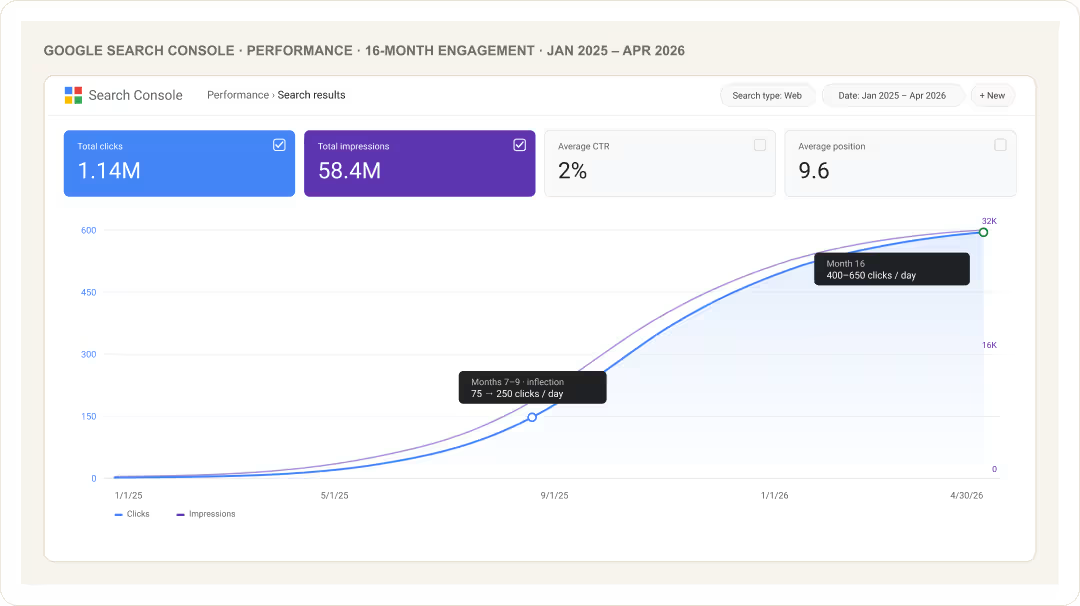
The line that mattered most wasn’t on the chart. It was in the P&L: paid ad spend cut by 60%, customer acquisition costs down significantly, and marketing spend that no longer swung wildly month to month. The brand reinvested the savings into inventory and packaging, the kind of upgrades that pay themselves back in reviews.
What I Took Away
- 1 On Shopify, collection pages are the business. Not the blog, not the homepage, the collection pages. Optimize them like landing pages and the rest of the site starts pulling weight.
- 2 The technical foundation isn’t optional, but it isn’t the story either. It’s the price of admission. Get it done, don’t glamorize it, and move on to the work that actually drives revenue.
- 3 Content earns trust before it earns rankings. In a high-ticket category, every piece should be doing at least one job for the buyer’s decision, not just topping up a keyword count.
- 4 Compounding is real, but it’s late. The first six months of a Shopify SEO rebuild look boring. Month 7 is where the graph starts telling you the truth.
- 5 CRO is what makes organic pay. The traffic gains are impressive on their own. Multiplied by a 10x conversion rate, they become the reason ad spend gets cut in half.
- 6 The best marketing outcome isn’t a bigger number, it’s optionality. When organic covers most of the revenue, the whole business runs on a longer leash.