Shopify Technical SEO: Clearing 1,000+ Crawl Errors From a Growing Jewelry Store
A month-by-month walkthrough of how I cleared over 1,000 technical errors from a growing Shopify jewelry store and got Google to start indexing the pages that actually mattered.
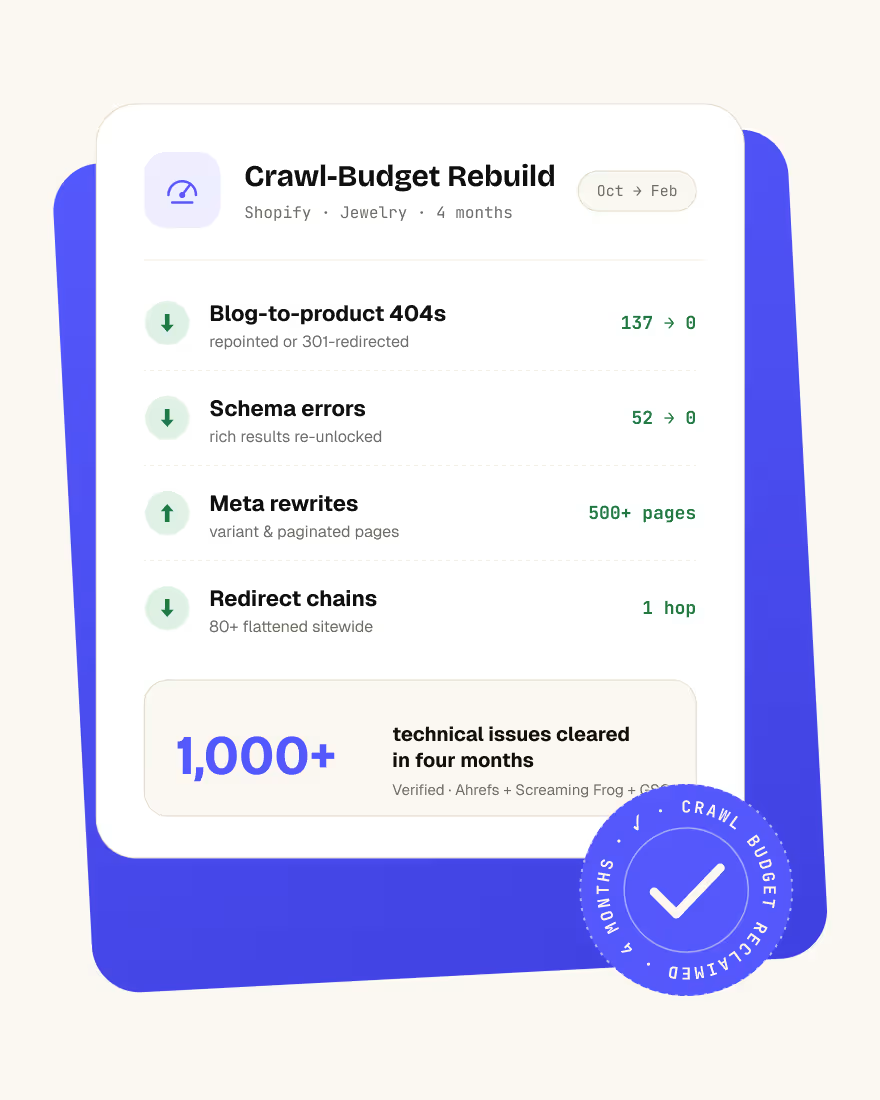
The 4-month crawl-budget rebuild, from 1,000+ technical errors to zero critical issues.
A Shopify jewelry store came to me with a common problem in an unusual size. Traffic was decent, sales were fine, but Search Console was quietly filling up with errors, 404s, redirect loops, orphaned pages, broken schema, and no one had time to fight it. Four months later, over 1,000 technical issues were cleared, and Google was crawling and indexing the pages that actually mattered.
This isn’t a growth-hack story. It’s a technical debt story, the unglamorous work that makes every other SEO win compound instead of leak. If you run a Shopify store past a few hundred SKUs, some version of this is probably queueing up in your own GSC right now.
The store on day one
The store had grown fast, a lot of product launches, a lot of retirements, a lot of blog posts pointing at URLs that no longer existed. On the surface it looked healthy. Under the hood, three years of small decisions had piled up into a genuine crawl-budget problem: Google was spending its time on 404s and duplicate collection paths instead of the products the brand needed to rank.
The client’s ask was simple: get this stable so our SEO investment stops leaking.
What Google was actually seeing
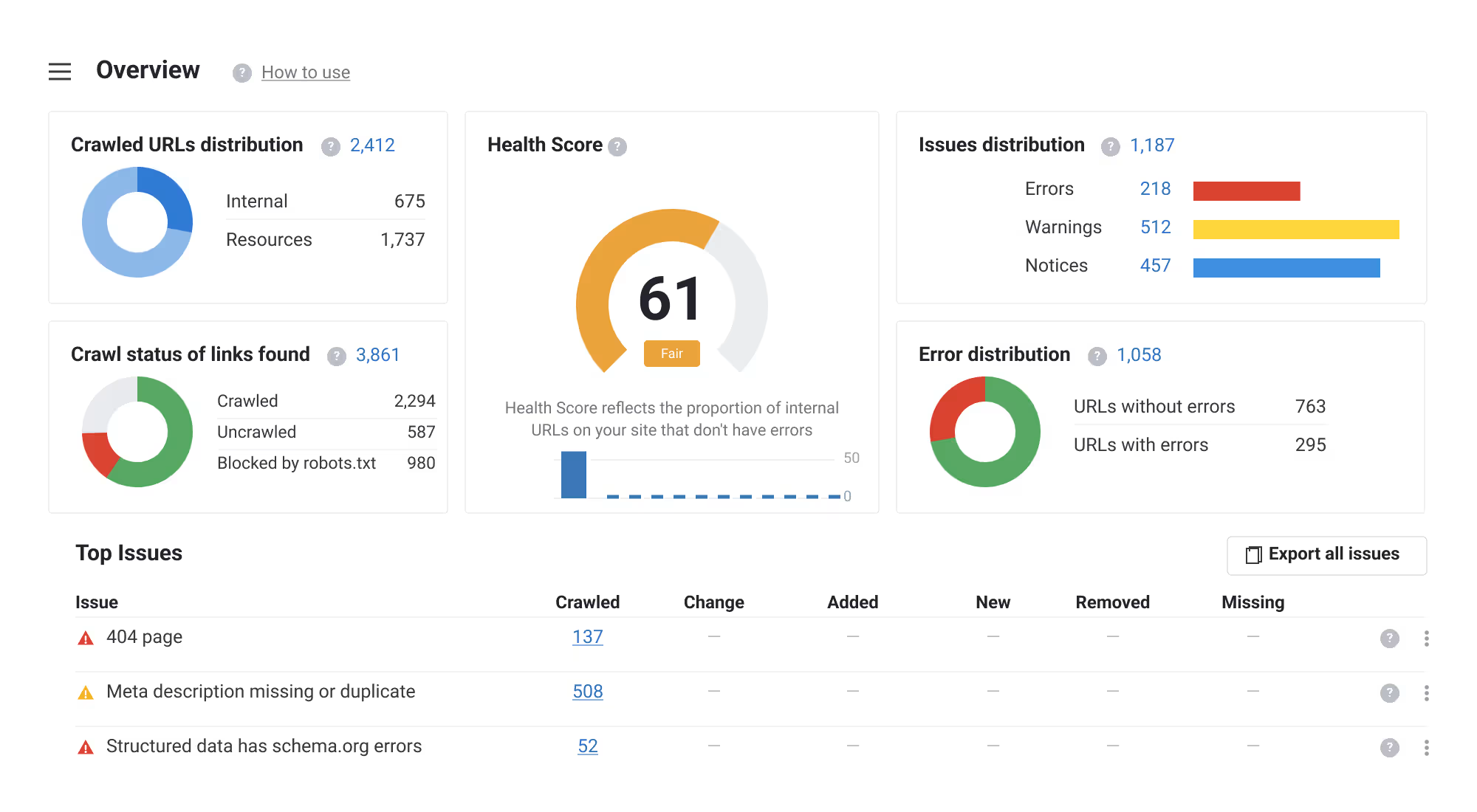
Before any fixes, I mapped what search engines were experiencing versus what the store looked like to a shopper. The two views weren’t even close.
“The store looked fine to a shopper. To Google’s crawler, it looked like a maze with half the doors locked.”
The Three-Tool Loop
Technical SEO at scale doesn’t work with one tool. Ahrefs sees things Screaming Frog misses, Screaming Frog catches things Ahrefs never surfaces, and Google Search Console is the only source that tells you what Google itself is actually doing. I ran this engagement on a strict three-tool loop, every issue had to appear in one, get validated in the second, and get verified fixed in the third before I called it closed.
The loop is boring on purpose. It’s the reason a 4-month engagement closes 1,000+ issues cleanly instead of playing whack-a-mole for a year.
The Four Phases
Four months, four objectives. Each phase set up the next, you can’t rebuild trust with Google until you’ve stopped bleeding, and you can’t prove impact until the trust rebuild has had time to land.
Month 1Diagnose
October was reconnaissance. The first Ahrefs crawl pulled a health score that looked worse than expected, then Screaming Frog and GSC filled in the details. The most damaging finding wasn’t a single big error, it was a pattern: high-traffic blog posts were sending readers to discontinued product URLs. Every one of those was a 404 in Google’s eyes and a lost conversion in the store’s.
By the end of October I had every issue triaged into a fix backlog, weighted by traffic impact.
Month 2Fix the Rot
November was the demolition month. Every broken internal link inside blog content got repointed to the closest live product or collection page. Discontinued product URLs got proper 301 redirects to their nearest match, not 404s. Redirect chains were flattened to single hops, an easy performance win Google notices quickly.
In parallel, I standardized the store’s internal linking to always use Shopify’s canonical /products/ path instead of the collection-nested variants. That single change quietly eliminated a whole class of duplicate-content signals that had been diluting product page authority for years.
Month 3Rebuild Trust
January was about giving Google reasons to trust the store again. All 52 schema errors got resolved and the store rolled out proper Product, Organization, and Review markup. That unlocked rich-result eligibility for price, availability, and star ratings, the SERP furniture that actually moves CTR on high-consideration jewelry queries.
The bigger job was the meta rewrite. Duplicate titles and descriptions were dragging down click-through across variant and paginated pages. I rewrote titles and descriptions across 500+ pages, phased over the month so Google could recrawl and re-evaluate in waves rather than getting hit with everything at once.
Month 4Prove It
February was verification month. GSC’s Coverage report confirmed the “Not Found” and “Excluded, Redirect Error” buckets had emptied out. The Rich Results report showed product errors down to zero and price/availability snippets rendering on key moissanite chain pages. Star ratings started appearing in SERPs for reviewed products.
By mid-February the store was drawing 20 to 25% more organic sessions to its priority collections and product pages, and, more importantly, GSC’s crawl stats showed Google spending far less time hitting dead URLs and much more time on the pages the business actually cared about.
The Outcome
The point of technical SEO isn’t the numbers on the audit dashboard. It’s the numbers on the business dashboard after the crawler stops wasting its time.
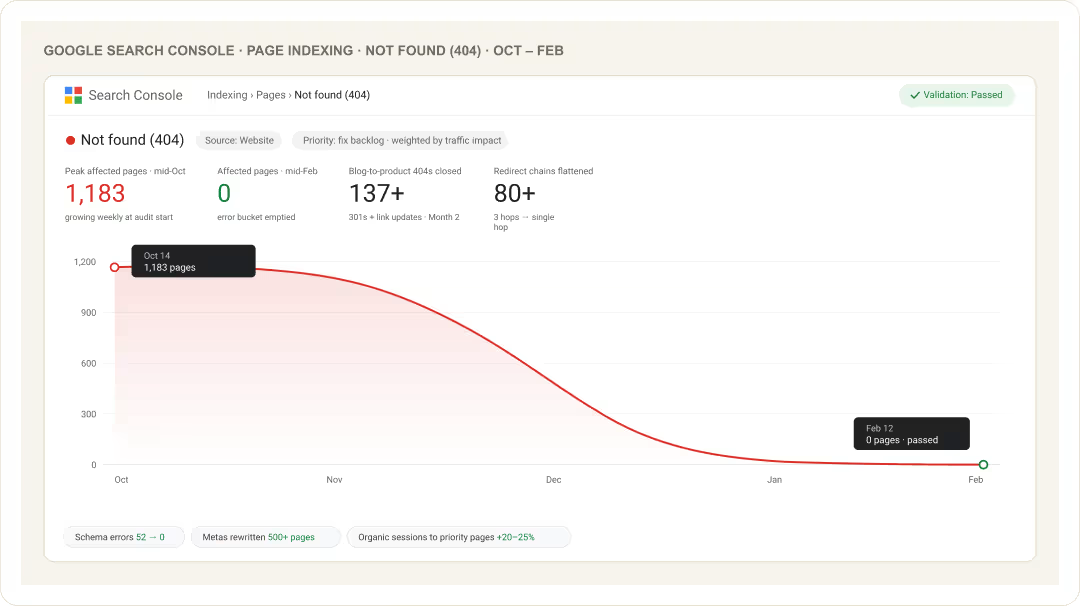
The lift to organic sessions is the number most people quote. The one I care about more is the shape of the crawl-stats graph in GSC after Month 3, Google spending far more of its budget on money pages instead of dead URLs. That’s the health metric that makes every future SEO investment worth more.
What I Took Away
- 1 Blog-to-product link rot is the silent killer on Shopify. Every discontinued product without a redirect is a 404 in Google’s eyes and a lost sale in yours. Make link auditing a publishing checklist item.
- 2 One tool is never enough. Ahrefs, Screaming Frog, and GSC each catch things the other two miss. The loop between them is where sustainable technical SEO actually lives.
- 3 Shopify’s URL architecture needs an opinionated hand. Left to defaults, products end up living at multiple canonical-adjacent URLs, quietly diluting authority for years.
- 4 Schema is a revenue fix, not a hygiene fix. Every rich result you’re not eligible for is CTR you’re leaving to competitors who did the work.
- 5 Ship big meta changes in waves, not batches. A phased rollout lets Google recrawl and re-score without destabilizing rankings across the site at once.
- 6 Cadence beats intensity. Auditing every 2 to 4 weeks catches new debt before it compounds. On an active Shopify store, the debt is always accruing, the question is whether you’re paying it down or letting the interest run.